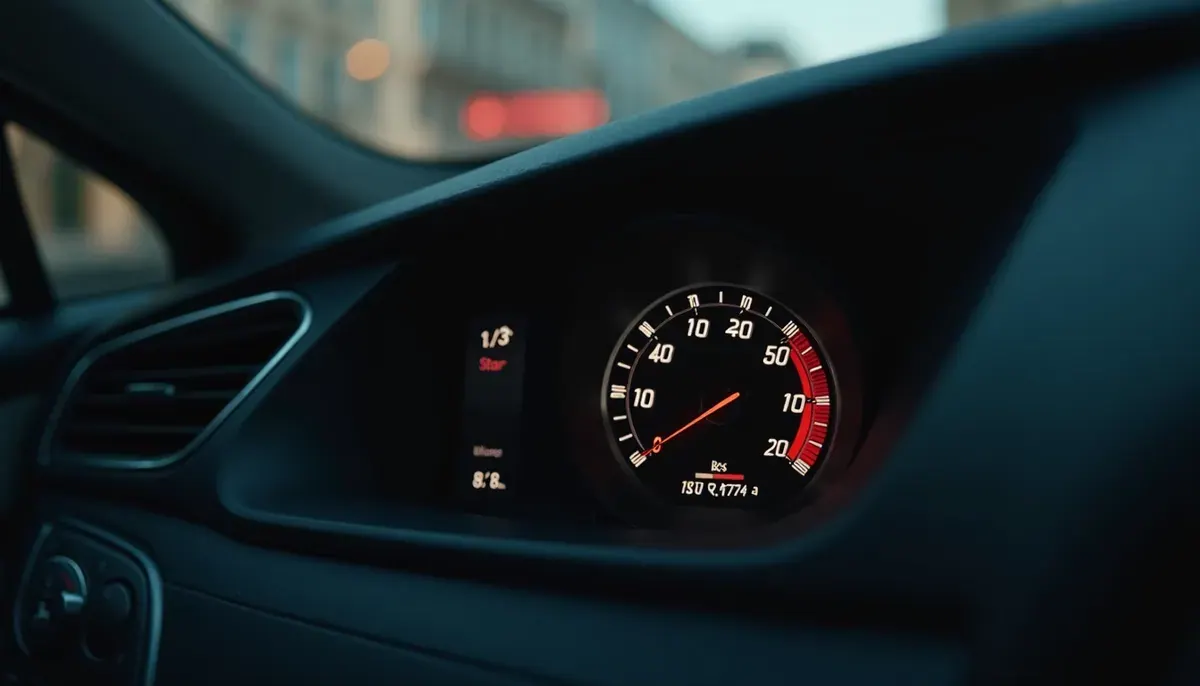
Paris holds the French record for time lost in traffic jams: 138 hours per year per driver in 2025 according to TomTom Traffic Index. At an average consumption of 0.8 litres per hour of jam, this represents 110 litres or 200 euros of fuel burned while stationary. Urban eco-driving in 2026 takes on strategic dimension with reinforced low-emission zones, Crit'Air 3 ban, and generalised 30 zones across nearly the entire capital.
Start-stop, ally in jams
Start-stop systems now equip 95% of new vehicles sold in France. In Paris, it saves up to 8% of fuel in urban cycle. The engine stops after 3 seconds of stop and restarts automatically when pressing the clutch or brake. To optimise, do not deactivate the system and ensure the auxiliary battery is in good condition (life span 4 to 6 years).
Prolonged stop cases
For lights over 30 seconds, manually cutting the engine saves more than start-stop. For frozen jams on the ring road, keep engine running if stop is under 60 seconds (relative cold start consumes more). Beyond that, systematically cut.
Coasting in neutral forbidden
Free-wheeling in neutral is forbidden in France since the 1958 decree (article R412-29 of the Road Code), punishable by 35 euros fine. This practice, supposed to save fuel, is actually dangerous (loss of engine brake, increased stopping distances) and useless on modern vehicles: injection cut in engine braking consumes 0 litres, versus 0.5 litres per hour at idle in neutral.
Light anticipation in Paris
Paris has over 1,800 light intersections. New countdown lights (deployed at 200 intersections in 2025) display remaining time. Spotting a red light at 100 metres allows releasing the accelerator, coasting in relative neutral (engine brake) and arriving at the speed of the green light. This natural green wave technique saves 15% of fuel in urban cycle.
Citymapper and Waze apps
Citymapper Paris has integrated since 2024 an eco-route mode prioritising axes with synchronised lights and avoiding repeated backtracking. Waze offers a CO2 mode displaying estimated emissions per trip. These free tools are authorised as long as fixed via approved holder (handheld smartphone forbidden, 135 euros and 3 points according to Mes Points Permis).
Low-emission zones and Crit'Air in Paris
Since 1 January 2025, Crit'Air 3 vehicles are banned in the Grand Paris LEZ (within A86) from Monday to Friday 8am to 8pm. Fine is 68 euros for a light vehicle, 135 euros for heavy goods. On 1 January 2027, Crit'Air 2 (recent diesels) will also be excluded. Check your sticker via the official certificat-air.gouv.fr site.
Solutions to stay mobile
For affected drivers, several options: switch to hybrid or electric with the conversion bonus (up to 6,000 euros in 2026), rent occasionally via Citiz or Free2Move, or use the Navigo Liberté pass. The Métropole du Grand Paris reinforced its electric bike purchase aid (up to 600 euros).
Fleet electrification
In 2026, 28% of vehicles registered in Île-de-France are electric or plug-in hybrid, against 12% national average. Public charging points tripled: 8,200 points in inner Paris according to the City Hall. Home charging (wallbox) costs between 800 and 1,500 euros, with 75% tax credit up to 500 euros.
Practical advice in jams
In jams, keep 5 metres distance with the vehicle ahead to avoid incessant stop-restarts. Prefer right lanes on the ring road: fewer changes, less braking. Deactivate non-essential energy-hungry functions (heated seats, defrost) if possible. For professional drivers, mandatory continuous training FCO now includes a specific Grand Paris urban eco-driving module.
Next step
How to get the right support?
DevisPermis.fr connects you for free with a certified driving school near you. Answer 5 questions in 2 minutes, and an advisor will call you back within 48h* to offer a tailored package.
Discuss it for free*Excluding Sundays and public holidays