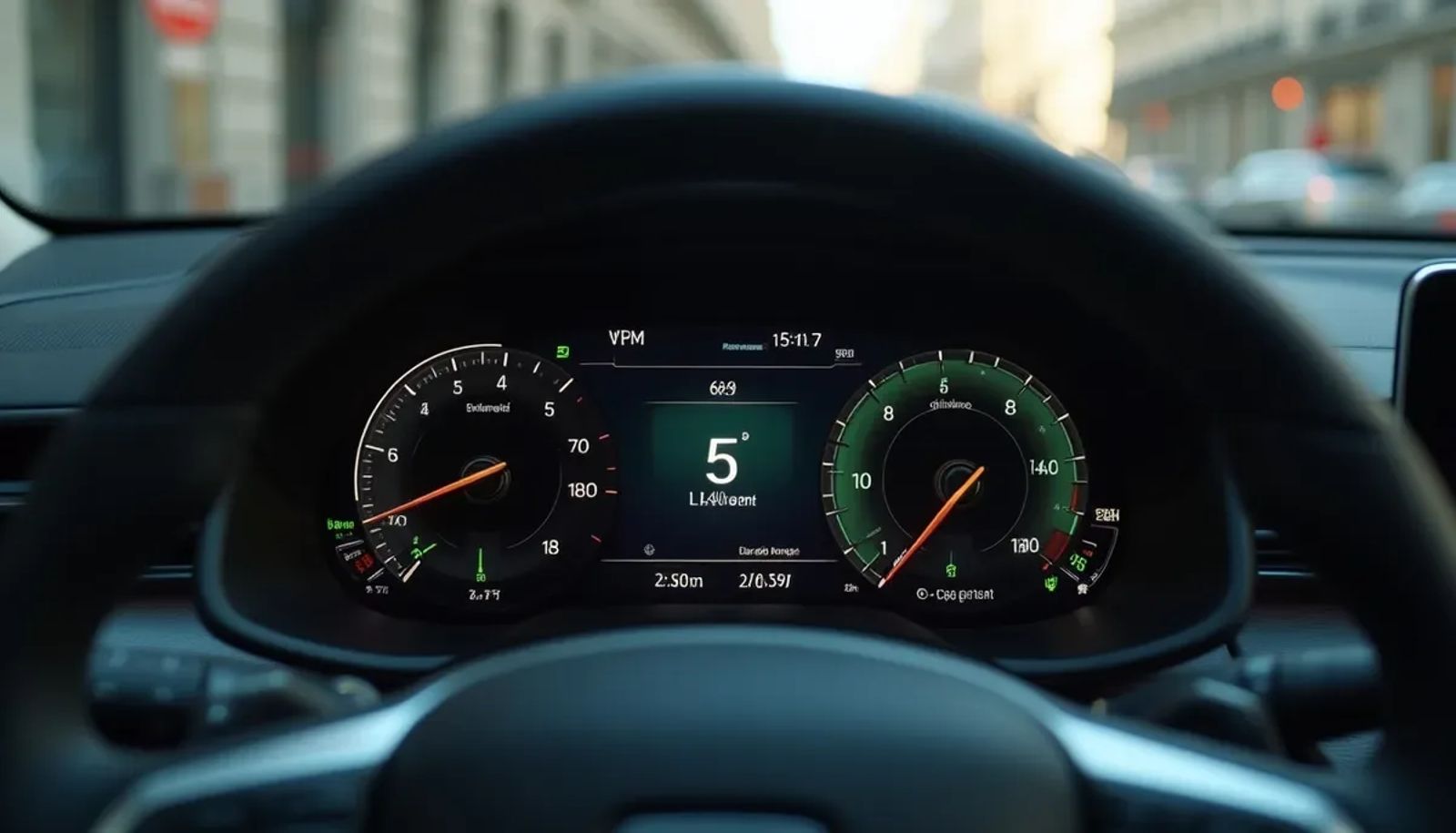
Driving in the city often means consuming twice as much as on a motorway. According to ADEME (French Ecological Transition Agency), the average thermal-vehicle consumption in Paris intra-muros is 8.5 L/100 km vs 6 L/100 km on the road. Applying eco-driving principles reduces this consumption by 15-25%, i.e. a €250-450 annual saving for an average Paris driver. This guide details techniques specifically suited to Paris traffic.
Why eco-driving pays more in the city
IFPEN (French Institute of Petroleum and New Energies) studies published in 2023 show eco-driving gains are 2-3x greater in urban traffic than on motorways. In the city, stop-starts, accelerations and decelerations are frequent; each driver's gesture directly impacts consumption. On motorway, constant speed limits room for manoeuvre.
Fundamental techniques
First technique: start gently and accelerate progressively. A jackrabbit start can consume up to 30% more fuel. Aim: shift to 2nd between 10-15 km/h, 3rd around 30 km/h, 4th around 45 km/h. Second technique: maintain a stable pace. Brutal speed variations are most costly. In Paris, anticipating traffic lights and jams lets you smooth your driving.
Regenerative braking on hybrids and electrics
On electric and plug-in hybrid vehicles, regenerative braking recovers kinetic energy and recharges the battery. This technology recovers 15-25% of energy consumed, particularly effective in-city with frequent stops. Maximise gain: use « B » mode (regen boost) on Peugeot e-208, « L » on Tesla Model 3, « One Pedal Drive » on Renault Zoe: engine braking recharges the battery on lift-off, reducing mechanical brake use.
Paris traps to avoid
In Paris, certain behaviours drastically amplify consumption. 1) Starting and stopping at the head of the line: prefer right lanes. 2) Flooring it to make an orange light: zero time gain, + 40% consumption. 3) Using AC at max in summer: + 15-20% consumption (prefer slightly open windows in-city below 50 km/h). 4) Stuck in jams: detours often profitable (GPS eco mode).
Specific savings on thermal vehicles
For petrol and diesel engines, several extra habits. Cut the engine at each 30+-second stop (automatic Stop & Start on recent vehicles, manual on older). Drive low-revs: shift below 2,000 rpm petrol, 1,800 rpm diesel. Use engine braking over mechanical: fuel injection cuts on lift-off (automatic saving).
Tyre pressure and maintenance
Insufficient tyre pressure raises consumption 3-5%. Check pressure every 2 weeks cold, respecting manufacturer values (fuel flap or door label). A clogged air filter adds 10% consumption. An oil change 20,000 km overdue adds 3%. Respect the service book to optimise consumption over time.
AC: optimised summer use
AC consumes 0.3-0.6 L/100 km extra in-city. Golden rules: windows open below 50 km/h, AC at 23-24°C (not 18°C) above, pre-ventilate 2-3 minutes windows open before starting in heatwave, park in shade as much as possible, use sun visors on the windscreen in summer.
Weight and aerodynamics: the neglected
A roof box or bike rack can raise consumption 20-40% on long trips. Remove them when unused. Empty your boot regularly: 100 kg dead weight = 5% extra consumption. Avoid driving with unnecessarily brimming tank (keep 15-20 L for sufficient range; brimming adds 35 kg).
Anticipation: the key to urban eco-driving
Golden rule in-city: look far ahead (150-200 m minimum). Observe traffic lights on approach: if red at 50 m, lift off, let it roll, the light may turn green before you arrive. Observe cross-traffic: spot upcoming jams and change route. Use GPS in eco mode (Google Maps has offered this option since 2023: most fuel-efficient route).
Eco-driving coaching apps
Several free apps coach eco-driving in real time: Eco Conduite by Michelin, Green Meter, Drivvo. They analyse acceleration, deceleration, rpm via phone GPS and award a score. Average observed gain over 3 months: 12-18% less consumption (Que Choisir 2024 consumer study source).
Eco-driving and the licence exam
Since the 2015 reform, the B practical exam includes an eco-mobility question at the end. The inspector may ask what concrete habits you apply. Expected answers: shift early, anticipate braking, check tyre pressure, avoid brutal acceleration, cut engine at extended stop. Mastering this part can earn 1-2 points on the overall score, decisive in a borderline case.
Find a Paris eco-driving school
DevisPermis.fr selects Paris schools integrating specific eco-driving modules in their programme. Our partners use recent vehicles (hybrids, electrics) and raise student awareness of environmental stakes. Fill the form to receive 3 personalised quotes within 48h.
Next step
How to get the right support?
DevisPermis.fr connects you for free with a certified driving school near you. Answer 5 questions in 2 minutes, and an advisor will call you back within 48h* to offer a tailored package.
Discuss it for free*Excluding Sundays and public holidays