France has about 4,500 radars in 2026, according to official Ministry of Interior figures. They contributed to halving road mortality in 20 years. But with 244,000 injured in 2025, their role remains central. Not all radars have the same function, precision or signalling. Mastering their specifics helps understand how the offence is established and how to contest it.
Fixed radars: backbone of the system
About 2,100 fixed radars equip the territory. Installed roadside or on gantries, they measure speed via Doppler radar beam or short-range laser. Their precision is plus or minus 5 km/h for speeds below 100 km/h, and plus or minus 5% beyond. This margin is automatically applied before fining, which explains why at 91 km/h recorded in 90 zone, no fine is issued.
Mandatory signalling
Each fixed radar is announced by a specific sign placed between 200 metres (in town) and 1 km (motorway) upstream. This sign does not mention the exact location, but indicates the presence of automatic control on the section. This signalling is mandatory since 2010 and subject to admissible contestations if missing or damaged.
Mobile radars
Mobile radars are embarked in unmarked law enforcement vehicles. About 500 in number, they are driven by operators (gendarmes or police) or more recently by private drivers under contract (the externalisation programme launched in 2018 and extended until 2026). They are not signalled. Precision is plus or minus 10 km/h under 100 km/h, plus or minus 10% beyond, a wider margin to compensate for vehicle movement uncertainty.
Moving mode vs stationary mode
In moving mode (the control vehicle is driving), only vehicles overtaking the police car can be flashed. In stationary mode (parking, shoulder), any vehicle in the beam is measurable. Moving mode represented 75% of mobile controls in 2025.
Section radars
Section radars number about 130 in France. They measure average speed between two points 3 to 30 km apart, via two gantries equipped with plate-reading cameras. This technology, praised for its fairness (impossible to brake just before), is installed mainly on accident-prone zones and variable-limit sections.
Average calculation
The system records entry and exit times. Distance being precisely known, average speed is calculated. If it exceeds the limit plus the legal margin, the offence is fined. Impossible to brake at the second gantry: the average integrates the whole journey.
Turret radars
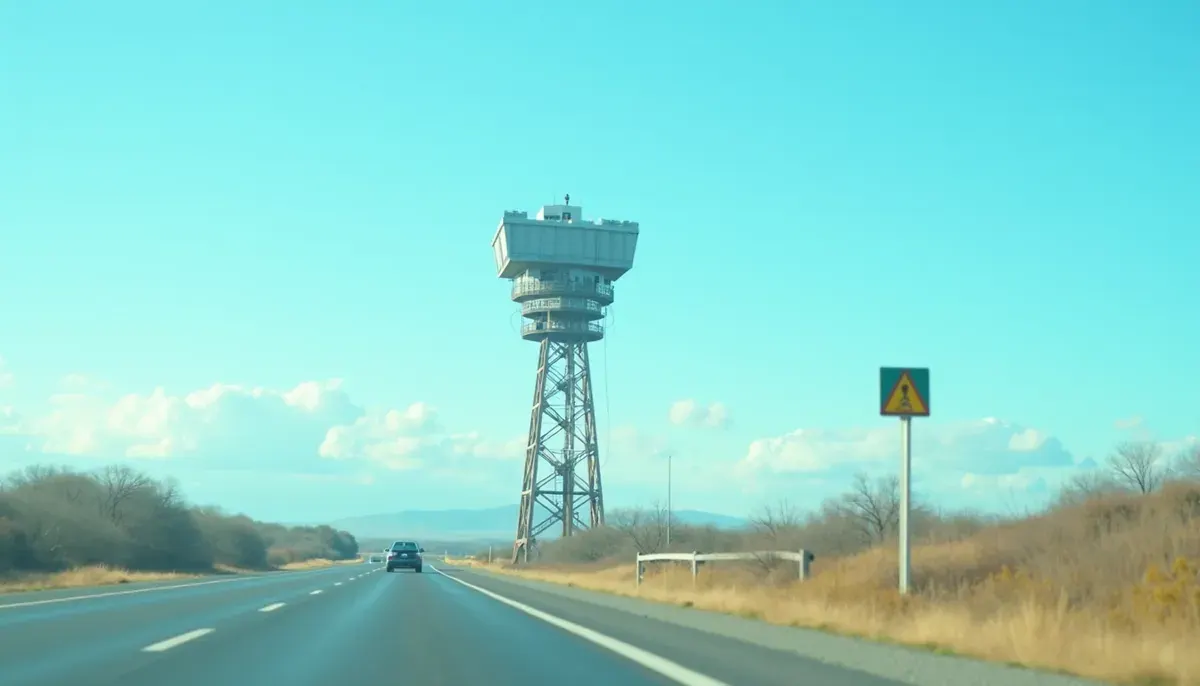
Deployed since 2019 and largely extended in 2024-2025, the 1,200 turret radars are installed on tall masts (4 to 6 metres). They measure speed but also red light running and seatbelt non-wearing. The cabin is often empty: a radar may be active or not, with no external sign. This strategy increases deterrent effect without additional cost.
Other types
Red light radars (700 devices) flash vehicles crossing a light after full red. Level crossing radars (about 50) secure SNCF crossings. Worksite radars (200) protect workers in works zones with temporary limit. Pedestrian radars (tested since 2024 in 30 municipalities) fine motorists not respecting pedestrian priority.
Coyote, Waze apps and the law
Radar-warning apps are authorised in France provided they do not indicate the exact location of mobile controls, but danger zones (4 km radius outside town, 2 km on motorway). Coyote, Waze, TomTom and Google Maps respect this obligation. Holding a handheld smartphone remains forbidden (135 euros and 3 points according to Mes Points Permis). Approved holder remains the rule.
Contesting a radar fine
Contestation goes through ANTAI (National Agency for Automated Processing of Offences) within 45 days. Admitted grounds: lent vehicle (driver identity proof), stolen vehicle (police report), similar-looking plate, proven radar failure. Fine consignment (prior payment, refunded if won) is mandatory to refer to court. Radar error contestation success rate is below 2% according to ANTAI 2025 figures.
Next step
How to get the right support?
DevisPermis.fr connects you for free with a certified driving school near you. Answer 5 questions in 2 minutes, and an advisor will call you back within 48h* to offer a tailored package.
Discuss it for free*Excluding Sundays and public holidays