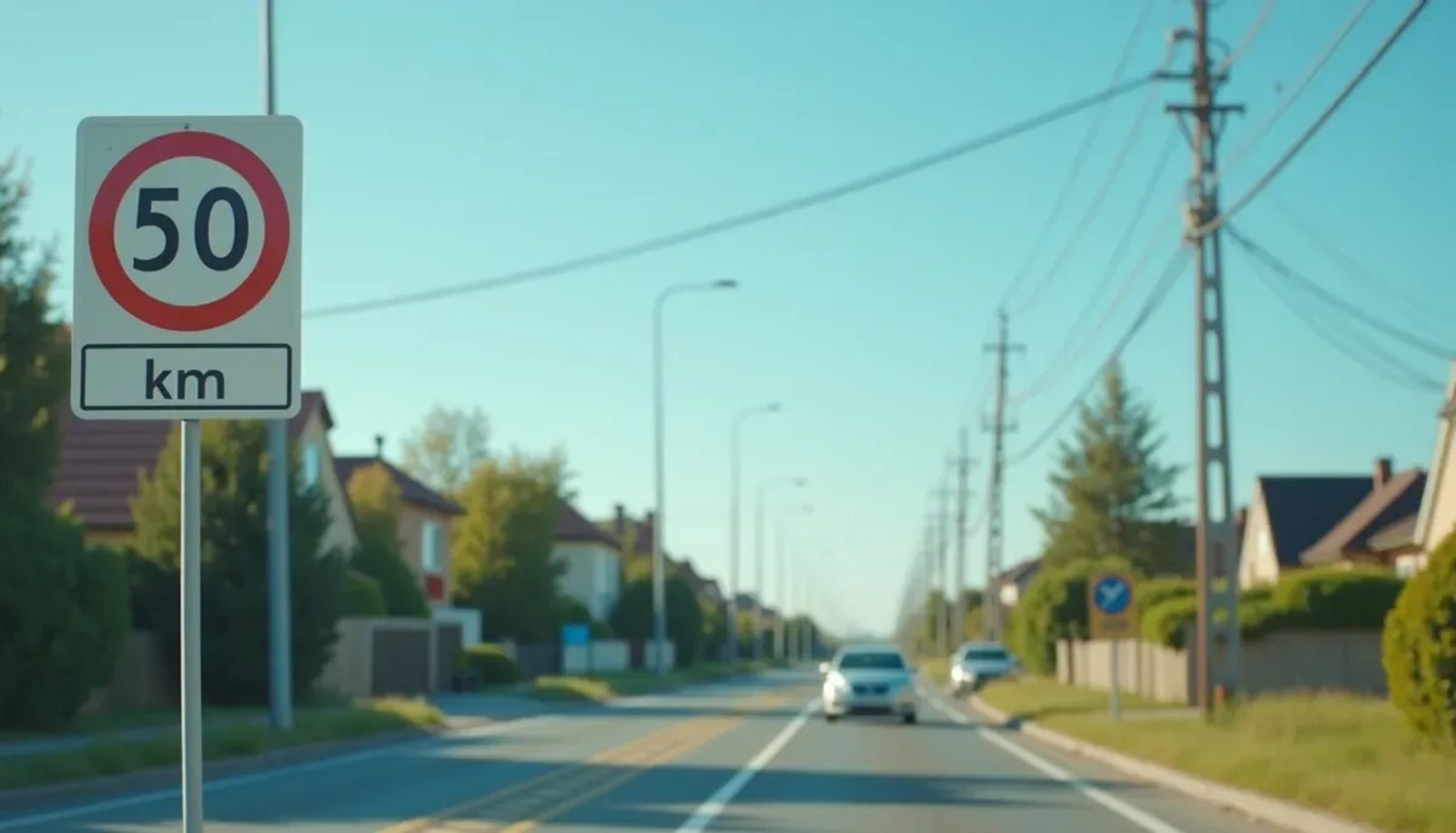
French speed limits have had several major changes since 2018: drop from bidirectional roads outside built-up areas to 80 km/h, then possible return to 90 km/h decided by departments, generalised 30-city (Paris, Lille, Lyon, Grenoble and 200 others), local drop to 30 or 20 km/h in shared zones. This 2026 guide details all speeds by road type.
5 main road categories and their limits
Basic 2026 French limits. Built-up area (white entry sign): 50 km/h default, often 30 km/h in most big cities. Bidirectional non-separated roads outside built-up area: 80 km/h (return to 90 km/h by prefectoral decision). Separated carriageways (2×1 or 2×2) without median: 90 km/h. Expressways: 110 km/h. Motorways: 130 km/h dry, 110 km/h in rain, 50 km/h with visibility < 50 m.
30-cities: over 200 in France
Paris generalised 30 km/h in August 2021 on almost all streets (ring road and some expressways excluded). Lille, Grenoble, Nantes, Strasbourg, Montpellier, Rennes, Toulouse, Bordeaux followed in 2022-2024. Concretely, over 200 French cities apply 30 km/h as default in 2026. 50 km/h remains exceptional (specific urban boulevards, structuring axes).
Shared zones: 20 km/h
Shared zones (signs with pedestrian, cycle and car silhouettes) impose 20 km/h max. Pedestrians have absolute priority across the whole carriageway (not just crossings). Frequent in pedestrianised historic centres and around schools. Non-compliance (excess or priority breach): €135 fine and 4-point deduction.
80/90 km/h non-urban: the big debate
In July 2018, the government dropped to 80 km/h non-separated bidirectional non-urban roads (about 400,000 km of network). Target: 400 deaths/year reduction. Department dispute: December 2019 Mobility Law authorised council departments to raise back to 90 km/h on certain sections (deemed safe enough). End-2026, about 40 departments raised all or part to 90 km/h, notably: Aube, Creuse, Gers, Lozère, Orne. The other 40 keep 80 km/h. Result: national change brought 10 % average mortality drop on these axes.
Rain, ice, fog: - 20 km/h
On motorway and expressways, max speed is reduced in bad weather. Rain: 110 km/h motorway (vs 130), 100 km/h expressway (vs 110), 80 km/h road (vs 90). Fog, snow: 50 km/h once visibility < 50 m. Ice: adapt driving, no specific official limit but an "inappropriate speed" offence (€1,500 max) can be booked. Adapted driving remains the driver's responsibility.
Young drivers: specific limits
A novice driver (probation ≤ 3 years, 2 years with AAC) has reduced limits. Motorway: 110 km/h (vs 130). Expressway: 100 km/h (vs 110). 90 road: 80 km/h. 80 road: unchanged. City: unchanged. Applies regardless of vehicle driven (even one-off rental). A/Apprenticeship disc on rear is mandatory.
Speeding sanctions
Progressive sanctions. Excess < 20 km/h non-urban: €68 + 1 point. Excess < 20 km/h urban: €135 + 1 point. 20-30 km/h: €135 + 2 points. 30-40 km/h: €135 + 3 points, possible suspension. 40-50 km/h: €135 + 4 points, up to 3-year suspension, offence. > 50 km/h: offence, up to €1,500 fine (€3,000 recidivism), 3-year suspension, possible vehicle confiscation, mandatory course. Large excess (> 50 km/h) + alcohol or drugs: licence cancellation.
2026 urban cameras
In 2026, 200 new multi-offence urban cameras deploy in major French metros. Simultaneously detect: speed (±1 km/h), unbelted, hand-held phone, insufficient safety distance, red-light running. Replace or complement classic red-light cameras. Driver may get several fines per single pass (one per offence).
Major metros and their specifics
Paris: 30 km/h generalised since 2021, 50 km/h on structuring axes (ring-road boulevards: 50), 70 km/h on ring road (since October 2024). Lille: 30 km/h since 2024. Lyon: 30 km/h widened since 2022, by-pass expressways at 70-90. Marseille: 50 km/h majority, targeted 30 zones (centre, schools). Bordeaux: 30 km/h generalised since January 2023.
Why slow down: studies and impact
Per ONISR, each average km/h less cuts fatal-accident risk by 4 %. Going from 50 to 30 km/h divides pedestrian-kill risk by 5 on impact. Adapted speeds also cut emissions (CO₂, NOx, fine particles) by 15-25 %, lower urban noise 3-4 dB (= perceived halving) and smooth urban traffic (fewer harsh accelerations).
France driving-licence quote
Mastering limits by road type is core licence training. DevisPermis.fr lists schools expert in 30 km/h urban driving and motorway driving. Fill our form for 3 quotes within 48h.
Next step
How to get the right support?
DevisPermis.fr connects you for free with a certified driving school near you. Answer 5 questions in 2 minutes, and an advisor will call you back within 48h* to offer a tailored package.
Discuss it for free*Excluding Sundays and public holidays