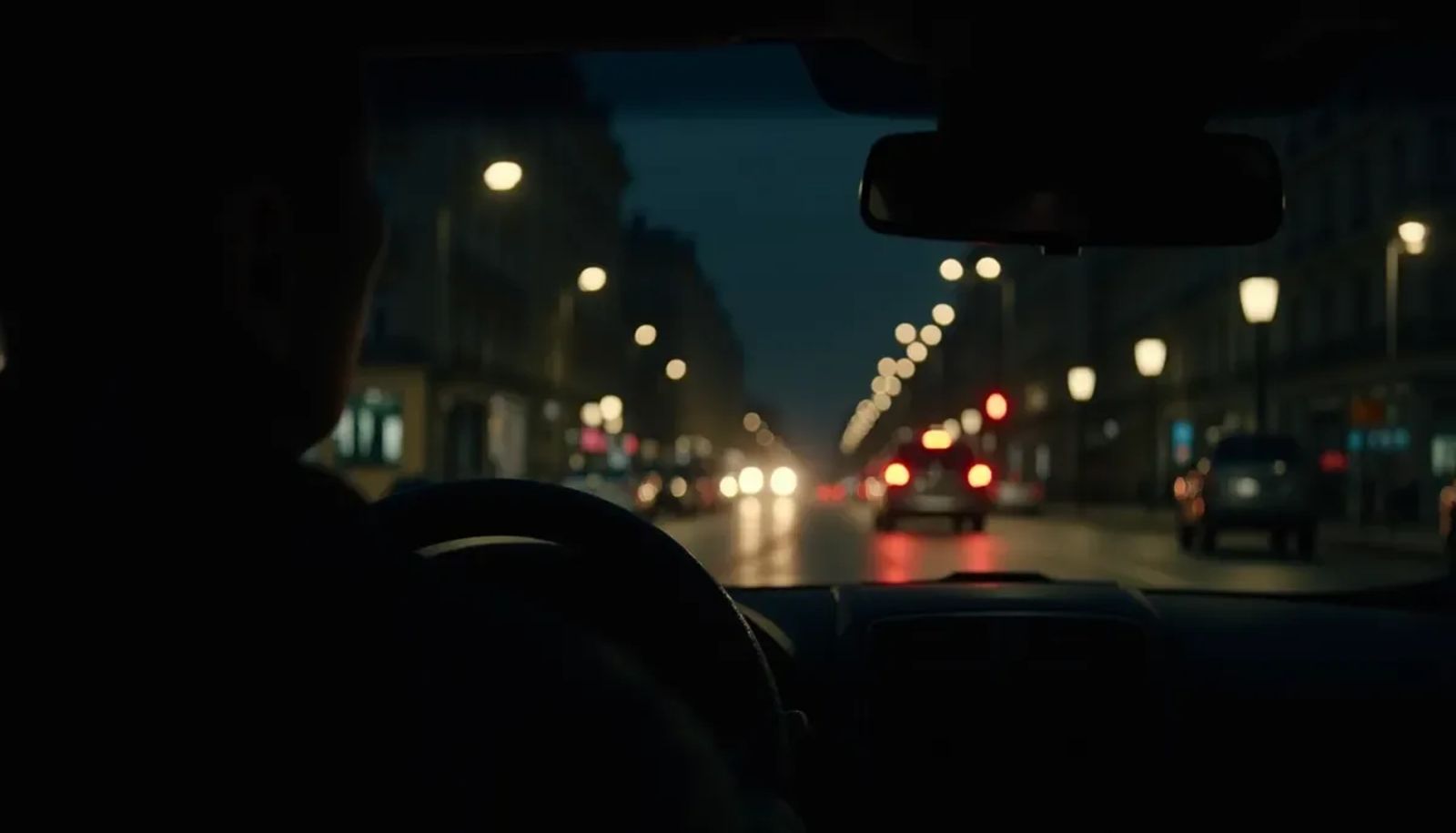
ONISR statistics are clear: 42% of fatal Paris accidents happen at night, while night traffic only represents 20% of the total. This over-representation comes from fatigue, alcohol, speed and reduced visibility. For a young driver, mastering night driving in Paris is critical. This guide details sensitive zones, reflexes and specific rules.
Zones requiring extra vigilance at night
Four Paris zones concentrate the majority of night crashes per Police Prefecture accident maps. 1) Station surroundings (Gare du Nord, Gare de l'Est, Gare Saint-Lazare): intoxicated pedestrians, taxis double-parked. 2) Party districts (République, Oberkampf, Bastille, Saint-Germain): reckless pedestrians crossing between bars. 3) The ring road (covered separately). 4) Club-access axes (rue de Rivoli, rue Saint-Denis) Friday and Saturday nights.
Risk time slots
Two critical slots: 11 pm-2 am (bars and restaurants closing) and 4-6 am (club closing, peak drowsiness). Weekends amplify the effect. National Road Safety Observatory statistics show a 2 am peak on Saturdays and Sundays.
Safety reflexes to develop
Five reflexes to integrate. First, raise safety distance to 3 seconds (vs 2 by day): reaction distances lengthen at night. Second, drop speed by 10% below the limit (40 km/h in a 50 zone, 45 km/h in a 50 with rain). Third, use dipped headlights in town - full beam is forbidden with others around.
Night visual scanning
At night, peripheral vision shrinks. Compensate with systematic scanning: interior mirror every 10 seconds, side mirrors at every lane change, blind spot before every manoeuvre. Look 3 or 4 cars ahead (anticipation) rather than just the immediate vehicle. This technique reduces emergency braking by 35% per IFSTTAR studies.
Alcohol and driving: 2026 young-driver rules
For young drivers in the probation period (3 years after licence), the tolerated alcohol level stays at 0.2 g/L blood (effectively zero glasses) since 2015. Above: €135 fine, 6 licence points removed, possible immediate suspension. In 2026, the law still applies strictly - breath tests are systematic in party zones between midnight and 5 am.
Alternatives to driving at night
If you go out at night in Paris, four alternatives are preferable: Noctilien (night bus, 47 lines), Uber/Bolt/Kapten (night +30% fares), Vélib' electric (24/7 available), walking if you are within 2 km. A Paris night taxi from Bastille to Saint-Lazare costs about €20 - far less than a fine and 6 lost points.
Unpredictable pedestrians
Night pedestrians are more unpredictable than day ones: 60% are intoxicated per the 2024 Police Prefecture study on the 11th district. They often cross outside crossings, look little, wear dark clothes. Anticipate by slowing near bars, looking between parked cars, preventively honking if a pedestrian seems absorbed.
Scooters and bikes without lights
Despite the legal lighting obligation, many Paris bikes and scooters ride without front and rear lights at night. Examiners test this anticipation. Before turning right, systematically scan the pavement and bike lane. A single lapse can be eliminatory if it creates danger.
Training at night
All serious Paris schools include 2-3 hours of night driving in their package. If not, ask for a « night » module: 2 extra hours at €120-150. Practise at varied times: 10 pm, midnight, 3 am to cover all conditions. First time, bring an experienced driver.
Request a free quote including night driving
DevisPermis.fr connects you with Paris schools offering a full night module. Fill the form in 2 minutes, receive up to 3 quotes within 48h. No commitment.
Next step
How to get the right support?
DevisPermis.fr connects you for free with a certified driving school near you. Answer 5 questions in 2 minutes, and an advisor will call you back within 48h* to offer a tailored package.
Discuss it for free*Excluding Sundays and public holidays