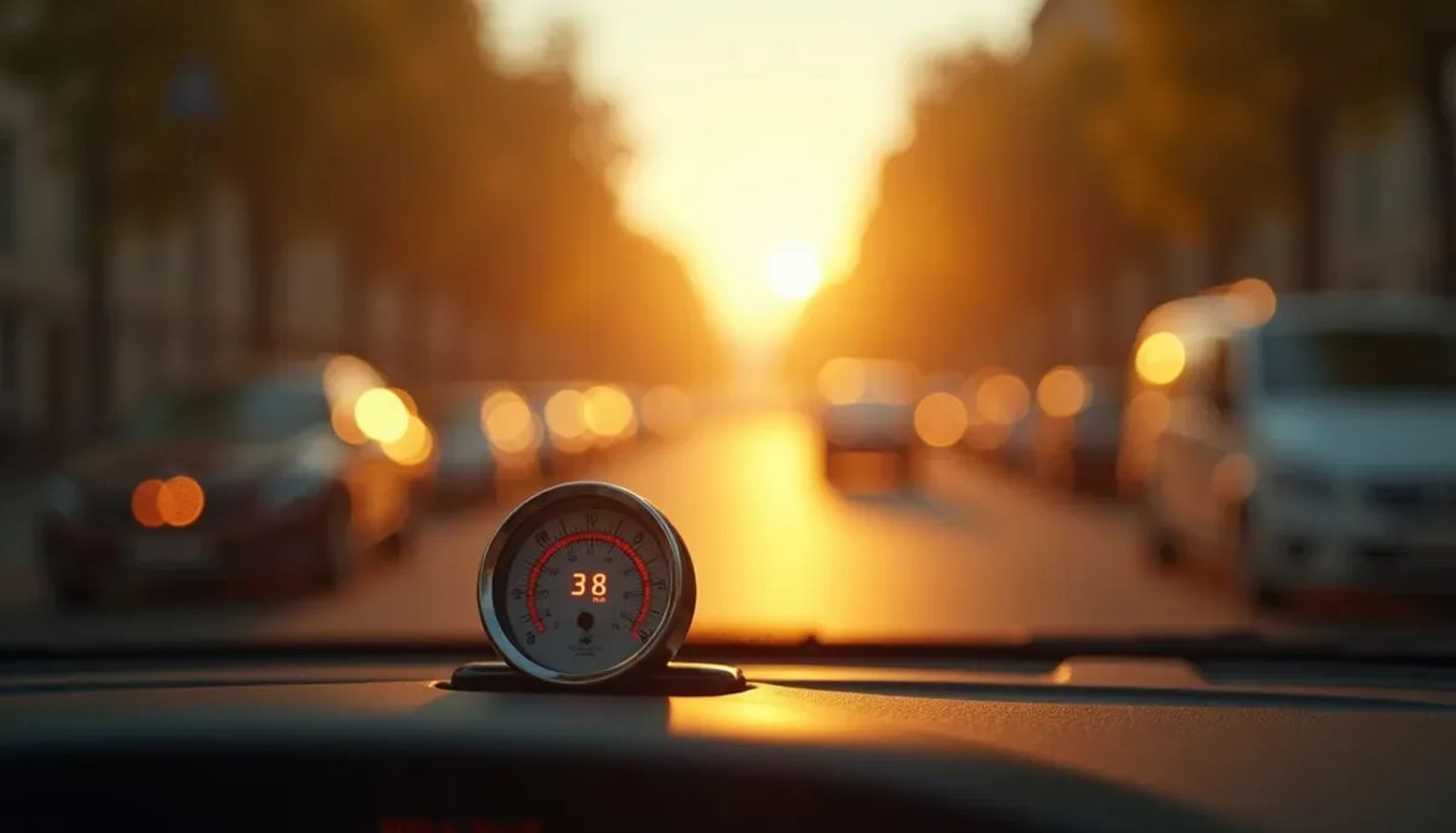
Paris now averages 5-7 heatwave episodes per year (above 35°C) per the 2025 Météo-France climate report. The urban heat island can raise the felt temperature to 40-42°C in mineral streets. For drivers, these conditions alter alertness and require specific precautions. This guide details 2026 tips to drive in Paris heatwaves safely.
Heat impact on driving
A joint IFSTTAR-INRS study published in 2023 shows that above 32°C in the cabin, alertness drops 15% and reaction time rises 20%. Effects are comparable to moderate alcohol consumption (0.5 g/L). Young drivers, less used to managing discomfort, are more vulnerable. Drink water regularly, avoid the hottest hours (1-5 pm).
Symptoms to recognise
Headaches, tingling, blurred vision, cold sweats, nausea: these are early heatstroke signs. Stop immediately in a shaded spot, open windows, rehydrate. If symptoms persist 15 minutes, call 15 (SAMU). Never resume driving until fully recovered.
Optimal air-conditioning use
Car air conditioning drops cabin temperature 8-12°C in minutes. In heatwaves, pre-vent by opening windows and doors 2 minutes before departure (release 50-60°C superheated air). Then AC with windows closed. 7-8°C gap with outside to avoid thermal shock. Fuel consumption rises 10-15% but safety comes first.
AC maintenance
A neglected AC loses 30% efficiency. Change cabin filter every 20,000 km or one year. Gas refill every 2-3 years (€80-120 in 2026). Bad smell at start-up indicates bacteria: ozone disinfection at a garage (€50). Without AC, heatwave trips should be avoided.
Asphalt and tyres in extreme heat
Above 40°C ambient, asphalt surface temperature can reach 60°C. Soft bitumen softens, creating ruts and reducing braking grip. Tyres heat up: pressure and grip are affected. Check pressure early morning, cold. Too-low pressure combined with heat raises motorway blowout risks.
The ring road in heatwave
The BP is particularly affected: sun-exposed asphalt, vehicles at near-constant speed. Avoid 12 pm-5 pm slots in heatwaves. If you must drive, cap at 45-50 km/h (traffic permitting), leave distance to avoid the « heat convoy » of following cars. Watch summer holiday departures: BP saturated during heatwaves.
Medication and heat: a double risk
Several common medicines amplify heat effects: diuretics, antihypertensives, antihistamines, certain psychotropics. Always check the « Driving caution » pictogram on the box (3 levels since 2017). In heatwaves, consult your doctor or pharmacist before trips. Some effects multiply from 30°C.
Adapted hydration
1.5 to 2 litres of water per day outside driving. At the wheel, plan 500 mL per hour of trip. Avoid sugary drinks (osmotic diuresis), alcohol (fully excluded for young drivers), excess coffee (dehydrating). Prefer still water, lukewarm tea, isotonic drinks for long trips.
Shade parking: right reflexes
Parking in the shade cuts interior temperature by 20-25°C. In Paris, prioritise underground car parks (Concorde, Bastille, Louvre) €15-20/day for 8h. Otherwise, favour narrow Marais or Latin Quarter streets, with tall buildings providing shade. A windshield sunshade alone drops temperature 10°C. For long stops, never leave animals, children or sensitive products in the vehicle.
Driving in Paris heatwaves: 5 rules
Summary: 1) Drive before 11 am or after 8 pm preferably. 2) Hydrate 500 mL/h of trip. 3) AC at 22-24°C, not below. 4) Check tyres the day before. 5) Park in shade systematically. If Météo-France red heatwave alert, postpone non-essential trips.
Request a free Paris licence quote
DevisPermis.fr offers a selection of Paris schools open in August and equipped with AC vehicles. Fill the form in 2 minutes, receive up to 3 quotes within 48h. No commitment.
Next step
How to get the right support?
DevisPermis.fr connects you for free with a certified driving school near you. Answer 5 questions in 2 minutes, and an advisor will call you back within 48h* to offer a tailored package.
Discuss it for free*Excluding Sundays and public holidays